Circular Tourism

Albania

Author name: Ci25ia

Uncategorized

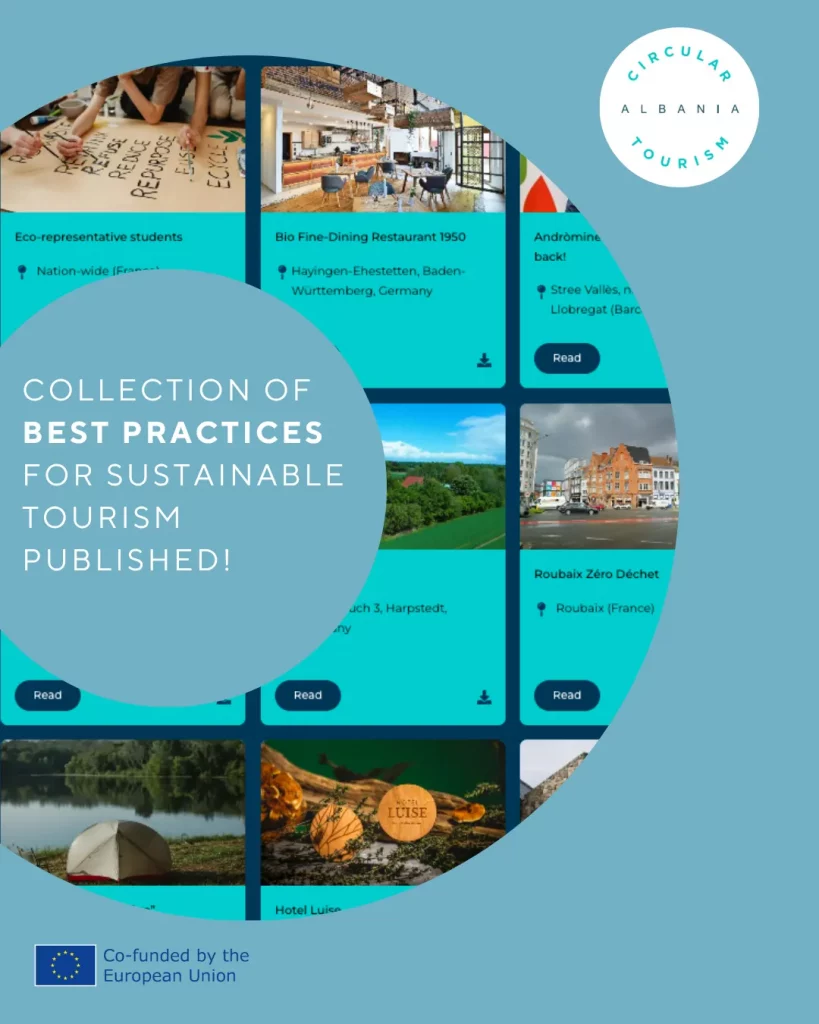
Collection of Best Practices for sustainable tourism published!

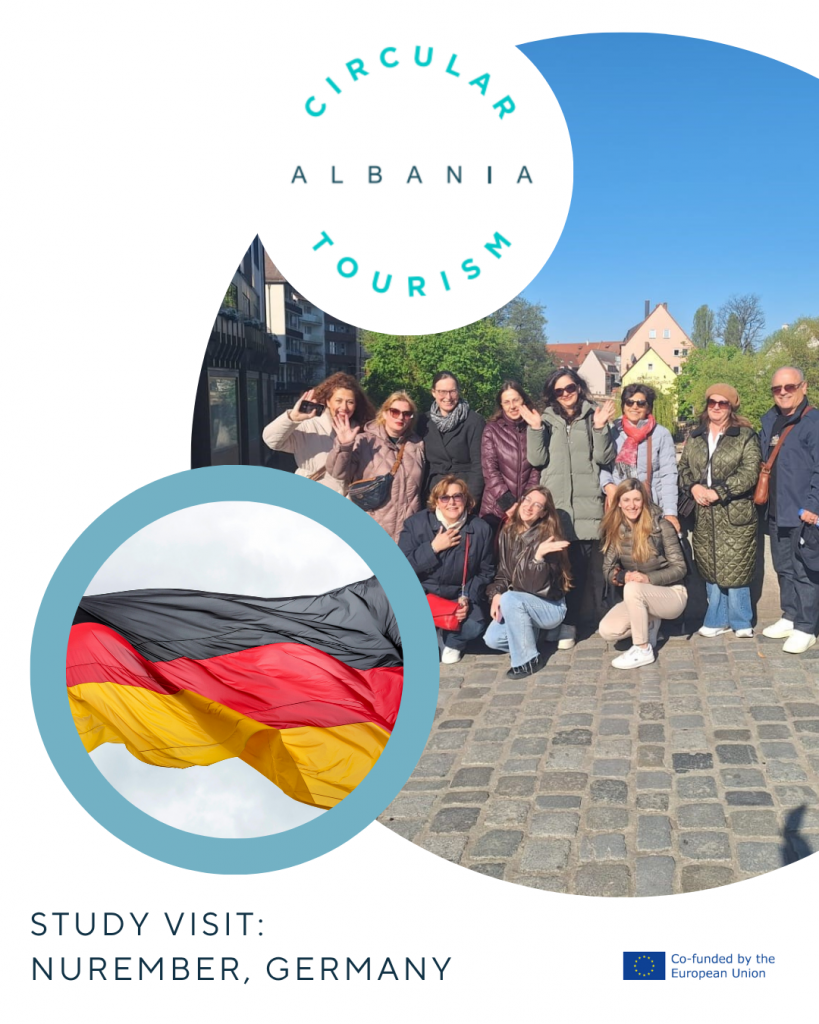
As part of our project, we compiled a collection of Best Practices in sustainable tourism from Germany, France, and Spain. These examples are intended to serve as a model and, above all, an inspiration for Albanian schools, educators, and students, demonstrating how sustainability can be effectively promoted and implemented in everyday operations—even when resources are limited. The Best Practice collection includes 28 examples in the areas of: Resource management Waste management Sustainable food production and utilization Featured organizations include hotels, educational institutions, and associations that have distinguished themselves through the implementation of sustainable projects in these three areas. All examples are easily replicable in the Albanian tourism sector, as they require only limited expertise and modest financial resources. The full document is available in English and Albanian for download on the project website. https://circulartourismalbania.eu/project-results/framework-and-methodology/compilation-of-good-practices https://circulartourismalbania.eu/sq/rezultatet-e-projektit/kuadri-dhe-metodologjia/compilation-of-good-practices In the next phases of the project, ITKAM and its partners will develop educational materials and organize Study Visits in Germany, Spain, and France, giving Albanian teachers and tourism professionals the opportunity to see sustainable tourism practices firsthand. If you want to stay up to date, follow us on LinkedIn (https://www.linkedin.com/company/circular-tourism-albania/) and Facebook (https://www.facebook.com/people/Circular-Tourism-Albania/61573510499656/)!

Uncategorized

Why Albanian Hospitality SMEs Must Embrace Circular Tourism Now

Why Albanian Hospitality SMEs Must Embrace Circular Tourism Now. Albania’s tourism sector is booming, with 11.7 million visitors in 2024—a 35% increase compared to 2022 and officials expect that number to rise to 15 million by the end of 2025 — a figure nearly four times the country’s population. While this growth brings economic opportunities, it also presents critical challenges: Overburdened waste management, especially in coastal and rural areas. High energy and water consumption with limited renewable energy adoption. Seasonal overcrowding, leading to resource strain and post-season waste. Lack of circular business models, with many hotels and restaurants still following a linear “take-make-waste” approach. Without sustainable practices, this rapid growth risks environmental degradation, rising operational costs, and long-term damage to Albania’s tourism appeal. The Solution? Circular Economy for Tourism The Circular Tourism Albania project is empowering hotels, restaurants, and VET institutions to transition to a zero-waste, resource-efficient model. Here’s why hospitality SMEs should act now: 1. Reduce Costs and Boost Efficiency Energy and water savings through smart resource management. Lower waste disposal costs by adopting recycling, composting, and upcycling. Sustainable sourcing (local, seasonal, plastic-free) cuts expenses and supports communities. 2. Meet Growing Demand for Sustainable Travel 73% of global travelers prefer eco-friendly accommodations (Booking.com, 2023). EU Green Claims Directive (2026) will require proof of sustainability—certifications like GSTC, Green Key, or EU Ecolabel will be essential. 3. Future-Proof Your Business Circular design (reusable amenities, zero-waste kitchens, upcycled decor) attracts conscious travelers. Digital tools and training help track sustainability performance and improve operations. How Albanian Hotels and Restaurants Can Start Audit Your Waste and Energy Use – Identify key areas for improvement. Train Staff on Circular Practices – Reduce food waste, optimise cleaning, and cut energy use. Partner with Local Suppliers – Source seasonal, unpackaged, and regenerative products. Apply for Sustainability Certifications – Gain credibility and stand out in the market. Join Circular Tourism Albania The Circular Tourism Albania project offers training, tools, and best practices to help Albanian hospitality businesses thrive sustainably. For deeper insights into Albania’s circular economy challenges, download our Mapping of Circular Economy Challenges and Barriers (in the albanian tourism sector) report here. 🔗 Visit our website  to learn more about upcoming project results!

Uncategorized

Key Circular Economy Challenges, Assessment of Barriers, and Opportunities in Tourism

Economy Challenges, Assessment of Barriers, and Opportunities in Tourism. 🌍 Moving Toward Circular Tourism in Albania: Key Challenges, Barriers & Emerging Opportunities Albania’s tourism sector is growing rapidly, and with that comes an increasing demand for more sustainable and circular solutions. As its first result, the CIRCULAR TOURISM project has produced a study on the key challenges to implementing circular economy principles in Albanian tourism. Here are some of the insights we gained into what is holding Albania back and what could potentially push it forward. 🔍 Key Challenges Despite its rich natural and cultural heritage, Albania’s tourism sector faces multiple systemic challenges that hinder the adoption of circular economy (CE) principles. Among the most pressing: Waste Management Deficiencies: Only 77% of the population is serviced by waste collection services. In coastal and rural tourist areas, waste collection services suffer from inadequate infrastructure. The issues become worse during peak tourist seasons, damaging the environment and polluting sensitive ecosystems, e.g. Lake Ohrid and the Ionian coast. High Resource and Energy Consumption: Tourism establishments such as hotels and transport services rely disproportionably on fossil fuels and inefficient energy systems. The transition to renewables remains minimal, thereby increasing the carbon footprint of the sector. Lack of Sustainable Product and Service Design: The sector continues to operate largely on a linear “take-make-dispose” basis, with continued limited use of recyclable materials, sustainable packaging, or green procurement practices. Over-Tourism & Seasonality: Popular destinations such as Vlora and Gjirokastër are increasingly suffering from crowding, while off-season tourism remains underdeveloped leading to resource waste and loss of economic potential. Weak Infrastructure for Circular Practices: Many regions lack the infrastructure for recycling, composting, or renewable energy integration, which is essential for a circular transition. Low Community Awareness and Engagement: Tourism businesses and local communities are often unaware of CE principles, and there’s minimal training or incentives to change behavior or business models. ⚠️ Barriers to Circular Economy Implementation The study categorizes the obstacles into five major groups: Institutional Barriers: Inconsistent regulations, weak enforcement, and lack of inter-institutional coordination have stalled meaningful progress. Policies do not sufficiently incentivize circular business models. Cultural and Behavioral Resistance: Many tourism SMEs continue relying on traditional business models. A lack of consumer demand for green services further discourages change. Financial Constraints: High upfront investment costs for energy-efficient infrastructure, coupled with minimal access to public grants or loans, prevent small businesses from investing in sustainability. Technological Gaps: In rural and mountainous areas, access to recycling technologies or renewable energy systems is scarce. Moreover, digital tools which could streamline circular practices are underutilized. Skills and Knowledge Deficits: There’s a clear mismatch between VET curricula and the skills required for a circular economy. Tourism professionals often lack awareness and training in sustainability, waste management, and green logistics. 🌱 Unlocking the Opportunities: A Circular Future for Albanian Tourism Despite these hurdles, the report also outlines promising pathways for embedding circularity into Albania’s tourism sector: Eco-Friendly Accommodation: Guesthouses and family-run hotels can integrate circular practices through energy-efficient renovations, eco-friendly cleaning supplies, and renewable energy installations particularly solar. Circular Food & Beverage Systems: With a rich culinary heritage, Albania is well-placed to develop farm-to-table tourism, reduce food waste through composting, and source ingredients locally to shorten supply chains. Sustainable Transport Solutions: Promoting electric vehicle fleets, bike rentals, and shared mobility services in high-traffic tourist areas could drastically reduce emissions and improve the visitor experience. Ecotourism Potential: Albania’s untapped natural parks and cultural heritage sites offer fertile ground for authentic, low-impact travel experiences. Training programs can equip locals and tourism professionals to manage and market these assets sustainably. Green VET Education and Training: Investing in professional development for teachers, updating VET curricula, and forging school-business partnerships will be vital in building a skilled workforce ready to lead Albania’s green transition. 🌐 Conclusion The path to circular tourism in Albania is paved with both complex challenges and exciting opportunities. As the country continues its journey toward EU integration and a greener economy, stakeholders across government, education, business, and civil society must work together to build a tourism model that is not only competitive but also circular, inclusive, and future-proof. Interested in learning more about Albania’s circular transition in tourism and our capacity building project? Stay connected as we share project updates, stakeholder stories, and pilot actions shaping sustainable travel in the Western Balkans.

Uncategorized

CIRCULAR TOURISM – Meet the Partnership

CIRCULAR TOURISM Meet the Partnership With more than 11.7 million visitors in 2024, Albania is becoming a top travel destination. But rapid growth comes with responsibility. How can tourism evolve without compromising the environment, local communities, or long-term viability? CIRCULAR TOURISM is an Erasmus+ Capacity Building project in the field of Vocational Education and Training (VET), created to address this challenge. The project aims to strengthen the capacity of VET institutions and tourism SMEs in Albania to adopt circular economy practices, reduce waste, use resources more efficiently, and prepare the sector for a greener, more resilient future. Who We Are The project brings together eight partners from Germany, France, Spain, and Albania, combining expertise in tourism, education, entrepreneurship, and local development: DE – ITALIENISCHE HANDELSKAMMER FÜR DEUTSCHLAND – Coordinator FR – EURAKOM ES – DomSpain Consulting SL FR – EURAKOM SASU AL – AULEDA – Local Economic Development Agency AL – Chamber of Commerce and Industry Tirana AL – Qendra e Formimit Profesional Publik Vlorë AL – Shkolla Profesionale “Antoni Athanas” Sarandë AL – Shkolla Profesionale Elbasan We promote sustainability as a long-term strategy, not a trend. What We Aim to Achieve Through a mix of training, collaboration, and practical tools, CIRCULAR TOURISM supports the twin transition—green and digital—within Albania’s tourism ecosystem. Our approach links education and industry, empowering professionals with the skills and knowledge needed for sustainable tourism development. Follow us for updates and insights Facebook Linkedin

Uncategorized

Introducing Circular Tourism Albania: A Step Towards Sustainable Growth

Introducing Circular Tourism Albania: A Step Towards Sustainable Growth Albania’s tourism sector is experiencing an unprecedented surge, with a 35% increase in tourist arrivals compared to 2022. While this growth signals economic opportunity, it also raises critical concerns: How can Albania ensure sustainable tourism development? How can local businesses and vocational education institutions integrate circular economy principles? And how can tourism professionals be equipped with the necessary skills for a greener, more resilient future? The Circular Tourism Albania project is designed to address these pressing questions by fostering sustainable, digital, and circular tourism practices. By bringing together Vocational Education and Training (VET) schools, SMEs, and industry experts, the project aims to build capacity, enhance international collaboration, and promote innovative approaches to tourism in Albania. Why Circular Tourism? Tourism is a key driver of Albania’s economy, yet its rapid expansion brings challenges such as environmental degradation, overuse of resources, and a skills gap in sustainable tourism management. A circular approach to tourism focuses on reducing waste, improving resource efficiency, and creating closed-loop systems that benefit both businesses and local communities. This means: Encouraging eco-friendly tourism initiatives that minimize environmental impact. Supporting local businesses in adopting sustainable business models. Enhancing education and training to equip future professionals with circular economy principles. Strengthening cooperation between Albanian VET schools and their European counterparts in Germany, France, and Spain. How Circular Tourism Albania Will Make an Impact The project takes a holistic approach to tackling sustainability challenges in tourism. Activities include: Mobilities and study visits for educators and students to learn best practices from European VET institutions. Training programs and webinars on circular economy strategies tailored to the tourism and hospitality sector. Mentoring programs for SMEs, helping them integrate sustainable solutions into their business operations. Education-business collaboration, bridging the gap between academia and industry to create lasting change. A Vision for Albania’s Future in Sustainable Tourism The Circular Tourism Albania project aligns with broader European strategies, including the EU Green Deal and the New EU Growth Plan for the Balkans, which emphasize sustainable economic development and international cooperation. By embedding circular economy principles into Albania’s tourism sector, the project contributes to the country’s long-term economic resilience and its future integration into the European Union. This initiative is more than just a response to current challenges—it’s an investment in a sustainable, circular, and prosperous tourism sector for Albania. Join us on this journey as we work towards a greener, more responsible future for tourism! Stay updated with our latest developments by following us on social media platforms!